


.jpg)
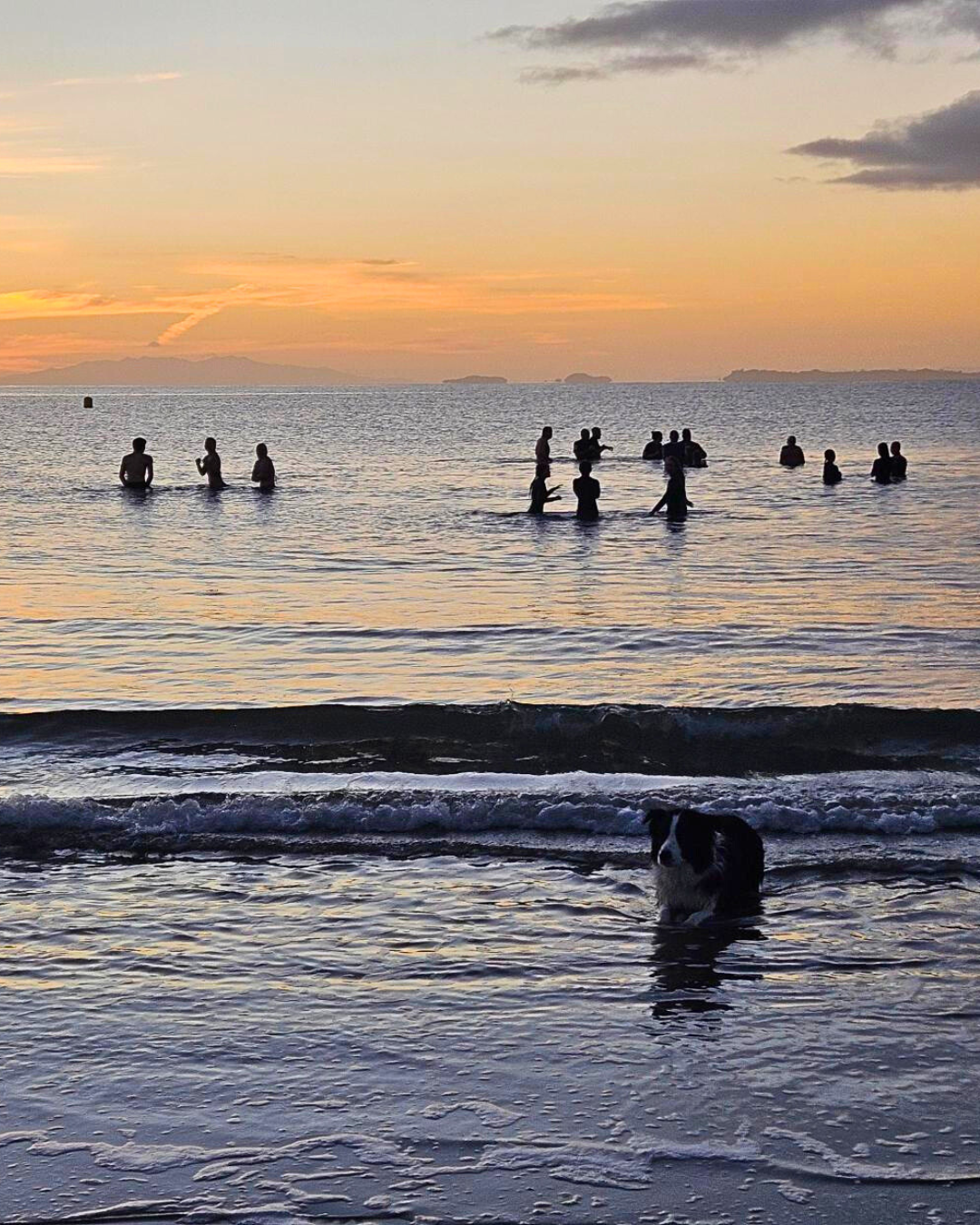
Whether it’s before breakfast, a lunch break dip, or a sunset swim: a few minutes in cold water is all it takes.
At Kenzie's Gift we run an annual winter swim challenge, so Kiwis across Aotearoa can put the perks of cold water to work — for themselves, and for the tamariki and rangatahi we walk alongside who are grieving the death of someone they love.
Here's what these benefits actually look like in practice.
Why cold water?
Research on cold water immersion has been growing fast, and the picture that’s emerging is consistent and encouraging. Each of the perks below has solid science behind it: here's what each one actually means for your life.
More energy
The lift from cold water isn't just in your head. Within seconds of immersion, your body releases noradrenaline — part of why you feel switched on the moment you get out. Research has found participants felt more active, alert and inspired after a single dip. The effect is short, usually a few hours, but it stacks the more often you do it. For most regular dippers, this is the thing that hooks them: a clean, free hit of feeling awake that no flat white can compete with.
A sense of achievement
This is the hardest perk to measure, and probably the most underrated. There's something about doing a genuinely hard thing — and choosing it, knowing you didn't have to — that resets what you think you're capable of. It’s all about making that decision and following through, whether it’s once a day or once a week. You walk away knowing you did the thing most people skipped, and that small, repeatable proof builds quietly over time.
Sharper focus
Cold water doesn't leave room for anything else in your head. The moment you're in, your attention narrows to your breath, your skin, and the next second. Brain imaging studies have shown that even a short immersion increases connectivity betweenthe parts of the brain that handle attention and emotional regulation. For anyone who's been feeling foggy, scattered or stuck in their own head, that hard reset can carry well into the rest of the day.
Better sleep
Improved sleep is one of the most consistent findings across current cold-water research. Regular dippers report falling asleep faster, waking less in the night, and feeling more rested. It's thought to be linked to nervous system regulation —the cold gives your body a clear signal to switch states. Better sleep changes how everything else lands. For anyone running on broken nights, this perk alone is worth the effort of getting in.
Less stress
Cold exposure puts your body through a controlled stress response — heart rate up, quick breathing, blood pressure raised. The theory is that doing this regularly trains your body to recover from stress faster, meaning your system is more resilient to everyday triggers. Researchers are still working out exactly how this happens, but the pattern shows up in study after study. Most regular dippers describe it the same way: standing at the edge of the water feels more challenging than anything that happens in the rest of their day.
Fewer sick days
This is the benefit with the strongest single piece of evidence behind it. A randomised controlled trial of over 3,000 people in the Netherlands found a 29% reduction in sickness absence among those taking regular cold showers, compared to those who didn't. Cold showers count. You don't need a beach to benefit from this perk — though it's a lot more fun when you find one!
Cold comfort, for grief
The perks above are reason enough for most people to give cold water a go. But for us at Kenzie's Gift, there's another reason this matters — and it's why every winter we invite Kiwis to plunge alongside us.
We work everyday with tamariki and rangatahi living with the death or serious illness of a parent orsibling. Grief is exhausting, physically and mentally. It lives in your head — replaying conversations, what-ifs, the moment you got the news. It sits heavily in your body, affecting everything from your energy levels to your diet and sleep. Cold water can help. Tina van Duijn, a researcher at Otago University who studies cold immersion, describes it as a kind of forced presence:
Tina van Duijn, researcher, Otago University
"When you have a strong, cold stimulus, you become really, really focused on the present. That's similar to what people want to achieve when they meditate. It stops you from overthinking, so at least for a little while it can give you a break."
Cold water won't make grief smaller. But it’s something a grieving person can do – amoment of self-care – that can help them get through the next hour, the next day.
What our tīpuna already knew
There's something a bit funny about cold water immersion being branded as a wellness trend. Matt Kiore (Ngāti Maniapoto), a rongoā practitioner working in youthsuicide prevention, put it plainly to 1News last year: his tīpuna have always known what the sea can do.
Matt Kiore, rongoā practitioner
"We use it to heal the spirit, to heal the mind, to heal the body and often to heal the whānau. Just coming out to the sea can help release the energy that's hurting them. We ask the sea to take it away. We ask our guardians to protect us."
Kiore takes rangatahi to the water to release what they're carrying. Sometimes that means swimming. Sometimes it's just standing at the edge.
Or as ProfessorJim Cotter of Otago University put it: "It's called blue therapy, but indigenous peoples call it life."
How to start, safely
If you want to give it a go, start small. Cold water can be dangerous for people with undiagnosed heart conditions. Talk to your GP if you have any concerns. Then:
1. Start with cold showers. Switch the last 30 seconds of your shower to cold. Build from there. You don't need a beach to get the benefit.
2. Don't go alone. Having a swim buddy isn't just safer — one of the best things about cold water dipping is the community and connection that comes with it.
3. Stay close to shore, and stay still. This isn't a workout. You're there for the cold, not the distance.
4. Get warm again, properly. Bring a towel, warm clothes (woollen socks!) and a hot drink. Get changed straight away.
5.Ankle-deep counts. You don't have to dunk. Thirty seconds in up to your knees is a good starting point.
6. Listen to your body. If it tells you to get out, get out. Build slowly. Remember: this is about wellbeing, and yours comes first.
Plunge with us
Every winter, we invite Kiwis across Aotearoa to take the plunge with us — once, weekly, daily, whatever works — and raise funds for tamariki and rangatahi grieving thedeath of their parent or sibling.
Every dollar goes towards free professional grief support: 1-on-1 therapy, support kits, and resources for whānau who'd otherwise have nowhere to turn.
You get all the perks. Grieving Kiwi kids get the support they need.
Sign up here.
• 1News (August 2024): "Can cold water swimming reduce depression and soothe grief?" — with Professor Jim Cotter, Tina van Duijn and Matt Kiore.
• PLOSOne (2025): Cain et al., systematic review of cold water immersion and wellbeing.
• PLOSOne (2016): Buijze et al., trial of over 3,000 people on cold showering and sick days.
• Biology (2023): Yankouskaya et al., cold water immersion and mood.
• Lifestyle Medicine (2022): Kelly & Bird, mood after a single cold water immersion.


