Grief Support for Rangatahi aged 18 - 24

Your Person Died.

The World Didn't Stop.

Lectures, shifts, rent, mates, a group chat that keeps going. Grief doesn't fit neatly around any of it. We've got you. No sign up, no need to read everything. Just start with the bits that help today.

Not for your parents. Not for kids. For you, whatever today looks like.
Built from our Memories Are Forever grief kit, rewritten on a cracked phone screen.


Grief Support for 18 to 24 years Old

What Do You Need
Right Now?

Pick the one that sounds closest. Take what's useful,
come back for the rest when you need.

Take time · mind
What Grief Can Feel Like

Anger, guilt, numbness, panic, confusion, fine one hour and not the next. It's all normal.

Understand what grief can feel like  →
From the diary
What grief can feel like
  • Grief can come in waves. You never know when.
  • You can feel sadness, anger, loneliness, fright, guilt — or numb. Feeling numb can be a way of protecting ourselves.
  • There's no right or wrong way to grieve.
  • Your way of grieving is OK, as long as you're not harming yourself or someone else.   
Want to know more? This lives on pages 6–7 and 20–33 of Memories Are Forever.
Taha tinana · body
Sleep, food and your body

Can't sleep, can't focus, can't be bothered eating. Grief lives in your body too.

Find practical help for your body →
From the diary
Sleep, food and your body
  • Even a short walk around the block can help.
  • Try several smaller meals through the day, rather than three big ones.
  • Turn your phone off at least an hour before bed.
  • Keep your normal sleep routine — and take naps when you need to.
  • These symptoms are worth chatting to your doctor about, to make sure.
Want to know more? This lives on pages 11–17 of Memories Are Forever.
Taha whānau · people
Talking to people

Flatmates, mates, whānau, your boss. What to say, and what to do when they say the wrong thing.

Find ways to start the conversation →
From the diary
Talking to people
  • Talk about the death while you're doing something else, like going for a walk.
  • Plan what you'd like to say before you say it.
  • Be prepared for long, awkward silences.
  • Try writing it down — on paper, in a card, or send a text.
  • When someone says the wrong thing: 'I know you want to help me, but your words make me feel [your feeling].'
Want to know more? This lives on pages 24–25, 34–35 and 42–43 of Memories Are Forever.
Taha wairua · spirit
Funerals, tangi and big questions

Do I have to go? What do I say? Beliefs, meaning, the why. Taking part, or not.

Read about funerals and big questions →
From the diary
Funerals, tangi and big questions
  • It's normal to question the meaning and purpose of life and death.
  • A ritual may be a religious ceremony, a celebration of life, or just a gathering of close whānau and friends.
  • You can give a reading, play some music, say a few words — or just be there.
  • Talking to someone you trust and feel comfortable with may help.
Want to know more? This lives on pages 11–17 of Memories Are Forever.
Memories are forever
Remembering the person who died

Birthdays, anniversaries, their playlist, their hoodie. Ways to keep them close.

Find ways to remember them →
From the diary
Remembering the person who died
  • Listen to their favourite music. Cook and serve their favourite foods.
  • A memory book or box is a safe place to keep things that remind you of them.
  • Wearing items of their clothing is OK. It's not weird to talk to the person who died.
  • Some families will remember together, and some won't. Either way is OK.   
Want to know more? This lives on pages 11–17 of Memories Are Forever.
Take time · mind
Talk to an actual person

Kenzie's Gift therapy, a counsellor, your GP, 1737, Youthline. Who does what.

See your support options →
From the diary
Talk to an actual person
  • Counsellors are trained to help you cope with grief, anger and fear.
  • Your doctor can refer you to community health services such as counselling.
  • Free call or text 1737 any time for support from a trained counsellor.
  • Youthline: 0800 376 633, or text 234.
  • Kenzie's Gift therapy is free — one form, and a real person gets back to you.
Want to know more? Click below.
There is no normal

Nobody Grieves The Same Way. Not Even Your Own Whānau.

Grief often comes in waves. It can show up in your body. It might feel hard - or impossible - to think clearly or remember things. It'll look different for you than it does for the person next to you. You might want to talk. You might want to go out. You might want silence. The only rule is safety, for you and the people around you.

Kenzie's Gift Therapy

Free, One-on-One Therapy

If your parent or sibling has died or is seriously ill, you can get funded sessions with a registered mental health professional. You fill in one form. A real person gets back to you.

WHO IT'S FOR

Young people up to 24 whose parent or sibling has died, or is seriously ill.

COST

Free - fully funded by Kenzie's Gift.

SESSIONS

Up to 12 sessions with same therapist.

RESPONSE TIME

We aim to get back to you within 5 working days.

NOT A CRISIS SERVICE

If you need help right now, use 111, 1737 or Youthline.

The Grief Podcast

Other Young Adults, Talking About it

Real people, in their own words. Each episode has
a transcript, and nothing autoplays.

FROM THE GRIEF DIARY

Tools For The Rough Days

The write-in pages from our young adult grief kit, rebuilt as short prompts.
Nothing you write is saved on this site. Copy a prompt into your Notes app,
or don't write anything at all.

When I Can't Sleep

Phone off an hour before, low-key music. If you're tossing, get up, make a tea, go back.

Open: When I can't sleep →
THINGS I WANT TO SAY

Write it before you say it. To whānau, to a mate, to the person who died.

Open: things I want to say →
WHEN SOMEONE SAYS SOMETHING DUMB

"Time heals." "They wouldn't want you sad." Try this instead: "I know you're trying to help. That isn't helpful for me. I just need you to listen."

Open: what to say back →
FINISH THIS SENTENCE

"The thing I most want somebody to understand is..."

Open the prompt →
Click

Finish This Sentence...

"The thing I most want somebody to understand is..."

Flip: Things I want somebody to understand →
Thank you! Your submission has been received!
Oops! Something went wrong while submitting the form.
Click

When Somene Says Something Dumb...

"Everything happens for a reason" or "they wouldn't want you to be sad."
Try this: "I know you're trying to help. That isn't helpful for me. I just need you to listen."

Flip: What to say back →
Thank you! Your submission has been received!
Oops! Something went wrong while submitting the form.

Things I Want To Say...

Write it before you say it. To whānau, to a mate, to the person who died.

Flip: Things I want to say →
Thank you! Your submission has been received!
Oops! Something went wrong while submitting the form.

When I Can't Sleep...

Phone off an hour before, low-key music. If you're tossing, get up, make a tea or have a bath, go back.

Flip: When I can't sleep →
Thank you! Your submission has been received!
Oops! Something went wrong while submitting the form.
READING LIST

Books That Actually
Helped

Recommended by the Kenzie's Gift team and people who've been
there. Most are at your local library.

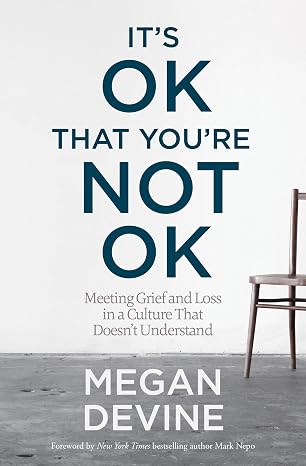
It’s OK That You’re Not OK
Megan Devine

Grief isn't a problem to fix or a phase to rush through—it's something you learn to carry. Therapist Megan Devine, writing after her own partner's sudden death, throws out the "stages of grief" playbook and gets real about what loss actually feels like. It's the book for anyone tired of being told to "look on the bright side."

Crying in H Mart
Michelle Zauner

Her mum's death in her twenties and everything that came with it. Food, culture, identity, and the mess of grief.

The Boy, the Mole, the Fox and the Horse
Charlie Mackesy

Four friends, hard terrain, conversations about fear, kindness and hope. Short enough for a bad night.

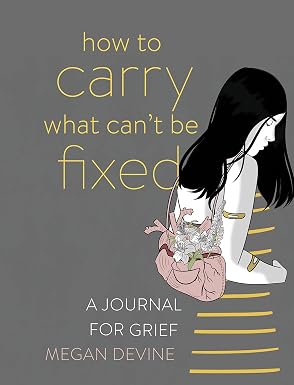
How to Carry What Can’t Be Fixed
Megan Devine

This is the journal version of Devine's message: your grief doesn't need a happy ending tacked on. Packed with writing prompts, art activities, and no-BS advice for surviving awkward moments (like the dreaded "how are you doing?"), it's a hands-on companion for actually working through loss. No timelines, no checklists—just space to be honest.

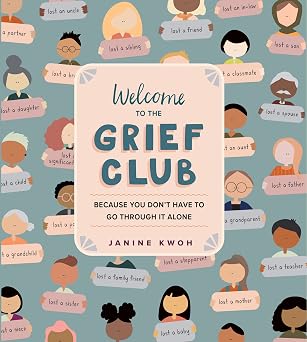
Welcome to the Grief Club
Janine Kwoh

Part comfort, part comic relief, this illustrated guide welcomes you into "the club nobody wants to join." Kwoh, whose partner died when she was in her twenties, uses charts, doodles, and sharp humor to cover the weird stuff about grief no one talks about—like grief bingo and the worst things people say to you. It's a hug in book form, for when things feel too heavy to explain.

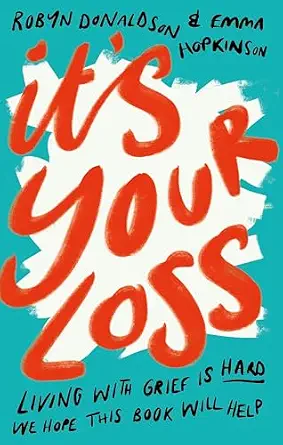
It’s Your Loss
Emma Hopkinson & Robyn Donaldson

Written by two women who know what it's like to grieve when young, this handbook proves there's no single "right" way to grieve. One author bottles things up, the other lets it all out—and together they walk you through the mess of anger, guilt, and sadness with quick five-minute coping tools. It's grief advice that actually sounds like a friend talking, not a textbook.

Cheer the F**k Up
Jack Rooke

Comedian Jack Rooke lost his dad at 15 and a close friend to suicide at 21—and turned these experiences into one of the most honest books about grief and mental health out there. A mixture of memoir and survival guide, it teaches you how to actually show up for a struggling friend without the awkward platitudes. Expect to laugh, cry, and maybe save someone's life along the way.

WHEN IT'S YOUR MATE

Supporting a Friend Through Grief

Your mate's mum, dad, brother or sister is seriously ill, or has died. Do you bring it up? What do you even say? And why were they fine last week and a mess today? You don't need the perfect words. You just need to show up. We can help you work out how.

Say their name. People often avoid it. Your mate notices.
Stay in contact. Grieving people often feel isolated because their family and friends assume they need space.
Keep showing them you're there for them.
Keep inviting them. Even when they keep saying no.
Remember the dates. Birthdays, anniversaries, the week it happened.
It's not a straight line. Grief is a roller coaster. It's normal for your friend to be fine one day, and falling apart the next.
Look after you too. Being there for someone is heavy. Talk to a mate, your whānau or a kaiako if you need to.
Right Now

Need Help Right Now?

If you are in danger, call 111.
For free, confidential support any time, call or text 1737.
Youthline is free on 0800 376 633 or text 234.